 SlapMac
Behind the scenes
Why SlapMac has so many clones, and why I'm fine with it
By Tonnoz4 min read
If you look for a slap app for your Mac today you'll find quite a few of them, and almost all of them showed up after SlapMac went viral in March 2026. SlapMac is the original Mac app: I built it in 48 hours as a joke, it blew up on Instagram, Reddit and X, and a few weeks later the copies started to arrive. I'm honestly not mad about it, and I think the reason they exist says a lot about where making software is going.
Where did SlapMac come from?
The idea came from Instagram. I saw a video of a laptop that reacted when somebody hit it, and I thought this needs to be a real Mac app that anybody can download and use, so I built SlapMac over a weekend and put it out on March 18, 2026.
I didn't start from zero either. The slap detection began as a Swift port of spank, an open source project by taigrr that reads the motion sensor inside Apple Silicon MacBooks. So SlapMac itself stands on somebody else's open source, and that's going to matter later in this post.
Why are there so many SlapMac clones?
Because copying an app has never been this easy. Today you can download an app, point an AI coding agent at it, describe what you see, and have a working copy by the evening. You don't even need to understand the hardware, because the sensor code is public, the idea fits in a 15 second video, and the agent does the typing for you.
So when something goes viral, the clones come fast. Most of the SlapMac ones copied the first version, put it on a landing page, and stopped there, because the goal was to grab some money while the trend was hot. That's fine, it's how the internet works now, and I'd probably be more worried if nobody had bothered to copy it.
If anyone can copy an app, what's left?
Features used to be the moat. If your app did something nobody else could build, you were safe for a while. That's mostly gone now, because any feature you can see on a screen, somebody can rebuild.
What's left is the stuff you can't pull out of an app by reverse engineering it. Distribution is a big one: people have to find you, and a silly video that millions of people watch does more than any feature list. Novelty matters just as much, because a clone can only copy what already exists, so it's always one step behind whoever comes up with the next weird thing.
And then there's taste and design, which is all the small choices that make an app feel right. How hard a slap has to be before it counts, which sound plays when you hit it harder, how the screen moves when you close the lid, and what you decide to leave out. You only get those right by caring about the thing and using it every day, and that's the part that stays with the people who make it.
What did SlapMac add that the clones didn't?
Instead of fighting the clones I just kept doing what I like, which is finding new dumb (and sometimes useful) things the MacBook sensors can do. Since that first weekend, SlapMac got:
- Lid Creak, a creaking door sound that follows how fast you open the lid, using the lid angle sensor most people don't know their MacBook has.
- An anti-theft alarm that goes off when someone moves your Mac while it's locked, and takes a Selfie of Shame of whoever grabbed it.
- Motion Cues, movement at the edges of your screen that follows the car or the train, so you don't feel sick using your laptop on a trip.
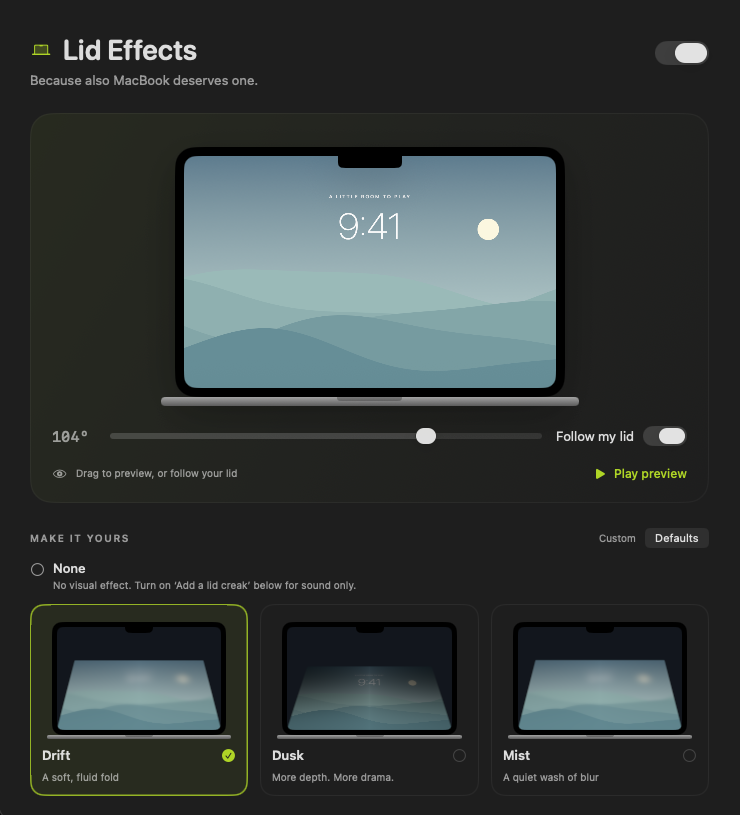
- Lid Effects, where your desktop tilts and blurs as you close the lid.
- A Whip pack that lashes across your screen on every slap, and Custom Sounds you record yourself.
- slapmod, a free mod that lets you slap Claude Code to make it stop.
- SlapMac Go, slap sounds for iPhone and iPad.
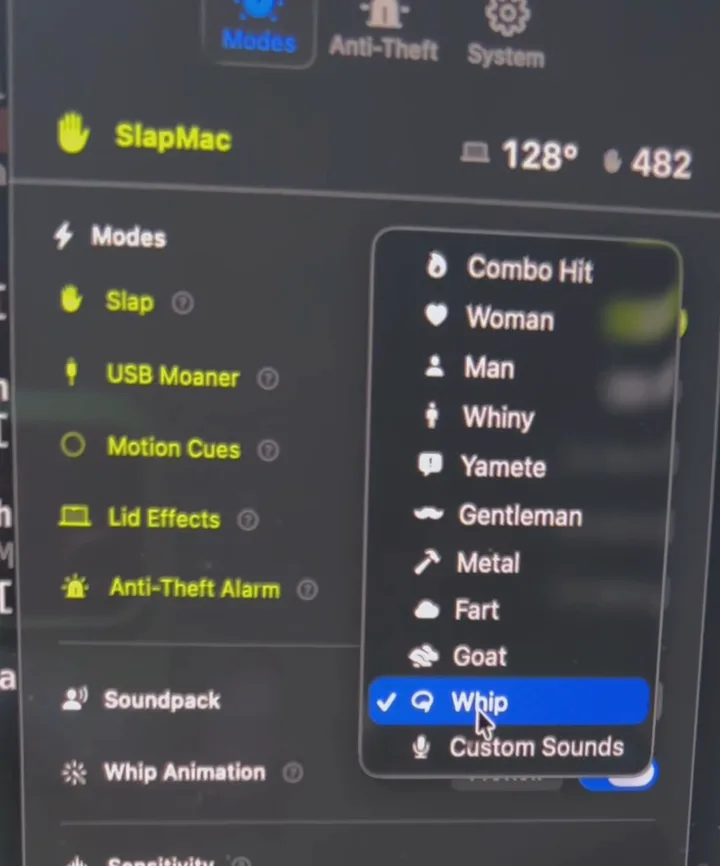
None of that was in the version the clones copied, and most of it came from me playing with the sensors and thinking "wait, what if it did this?".
Is closed source software over?
I think it's heading that way. If an AI agent can read your app and rebuild it in a day, keeping the code secret doesn't protect you much anymore. So I expect a lot more software to be open, or to sit somewhere in between, where the code is out there for anyone to read and what you pay for is the license, the updates, the support and the person who keeps making it better.
slapmod already works like that. It's MIT licensed, so anybody can read it, fork it or copy it, and if you want more of the fun you can get SlapMac on top. And since SlapMac started from open source code itself, it feels right that some of it goes back out the same way.
If you made your own slap app, or you're building something cool on the same sensors, send it to me on Instagram. I'd really like to see it.